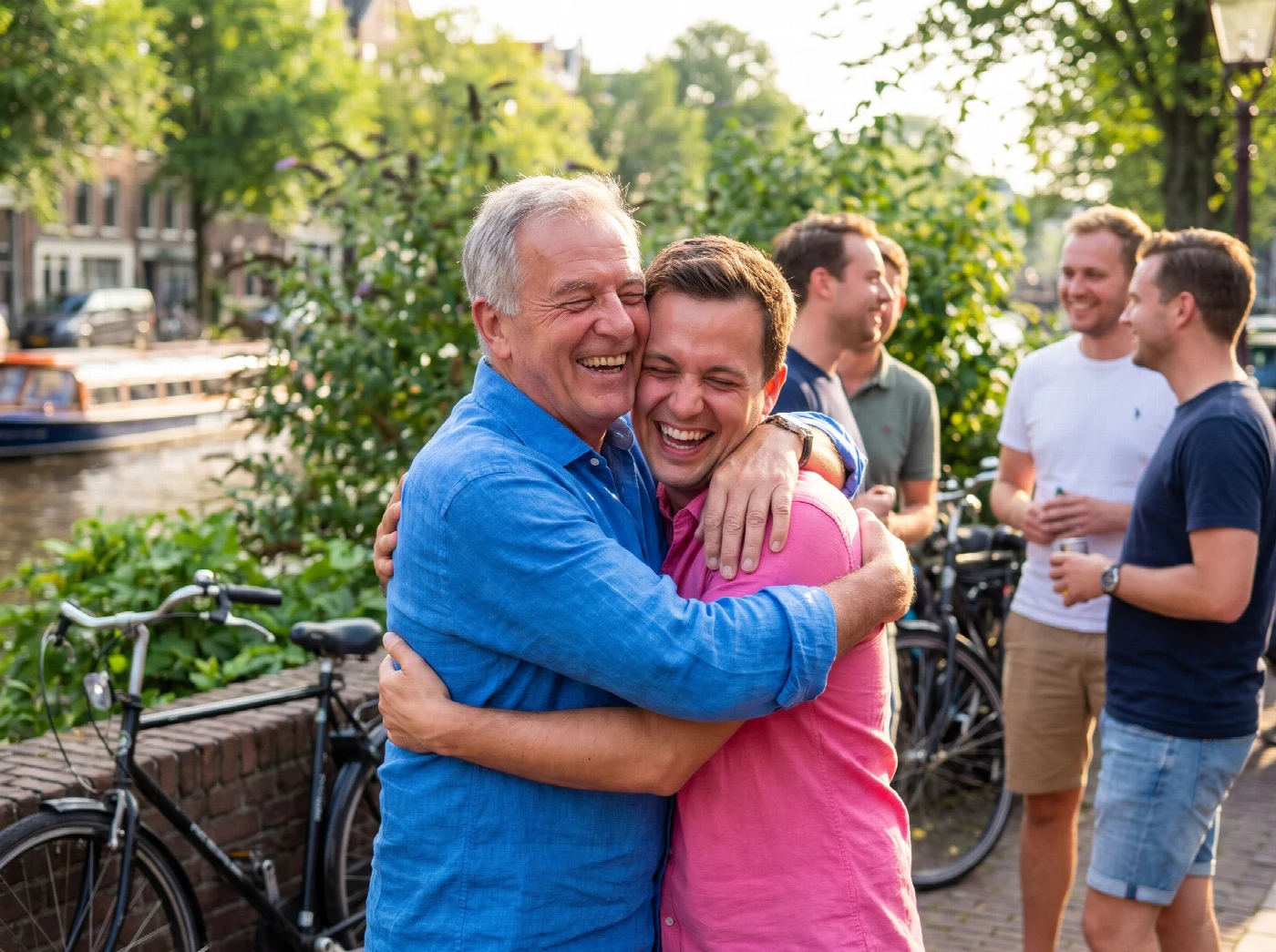
For generations, the conventional narrative of masculinity was straightforward, rigid, and strictly defined. A man was expected to be a self-reliant provider—unshakable, emotionally guarded, and physically dominant. While this traditional model offered clarity, it frequently came at a steep cost: emotional isolation, suppressed vulnerability, and a fragmented sense of self.
In recent years, a profound cultural shift has been quietly taking root across Western societies. Men everywhere are asking deeper questions: What does it mean to be a man today? How can we retain our strength without closing our hearts? And where can we find spaces to meet other men in true authenticity?
“Straight men often feel the need to discover their sensitivity. And gay men want to get rid of superficial physical contact and make real contact with their body and vulnerability.”
— Tijs Breuer (founder of Men in Touch Festival)
This evolving conversation is moving masculinity away from rigid expectations toward a dynamic, holistic practice. In this landscape, initiatives like the Men in Touch Festival in Amsterdam serve as vital catalysts, offering a grounded sanctuary for conscious men and diverse communities to meet, heal, and grow together.
The Paradigm Shift: From Isolation to Integration
Modern sociological studies show that traditional societal norms often discourage men from expressing vulnerability or seeking emotional support. This emotional “armoring” can lead to loneliness and disconnect, not only in personal relationships but also within male friendships.
“Traditional masculinity requires men to cut off parts of themselves to fit into a mold. A new vision of manhood invites us to be whole again—integrating our strength with our tenderness, and our action with our heart.”
— Bell Hooks
The emergence of conscious masculinity challenges this pattern. It invites men to integrate qualities that were historically treated as opposites:
- Strength and Tenderness: Recognizing that true courage lies in being open and emotionally present.
- Action and Stillness: Balancing external drive and purpose with inner reflection, mindfulness, and quiet awareness.
- Autonomy and Belonging: Honoring individual boundaries while building deep, trustworthy brotherhoods.
Rather than rejecting masculinity, this approach expands it—inviting men to drop the mask of having everything under control and step into a more complete, embodied expression of who they are.
We ask Tijs Breuer why he co-created The Men in Touch Festival.
“While individual self-reflection is essential, transformation flourishes when supported by a community. This is precisely where the Men in Touch Festival in Amsterdam plays a crucial role. As a collaborative we wanted to co-create a weekend festival that provides a safe and conscious environment for men—inclusive of cis, trans, non-binary, and queer masculinities (often gathered under the umbrella of ‘Men+’) — to connect beyond superficial daily interactions.”
Will this festival focus on talk and discussions?
Tijs: “No, we want to bring in movement, touch and stillness. The wisdom in your body is amazing. We think it’s all in our heads, but no matter how much you’ve forgotten or pushed away; it is stored in your body. And that comes back with touch, by going into your body.”
Here is why community gatherings like the Men in Touch Festival are so transformative for modern men:
- Reclaiming Safe, Conscious Touch
In many Western cultures, physical touch between men has been heavily restricted, often limited to competitive sports or formal handshakes. The festival creates a structured, consent-based environment where touch is reclaimed as a natural, non-sexual, and healing expression of care, friendship, and brotherhood. Through bodywork, movement, and guided touch, men learn to regulate their nervous systems and release long-held physical tension. - Radical Inclusivity and Belonging
One of the festival’s core strengths is its commitment to inclusivity. By bringing together men of different ages, backgrounds, sexual orientations, and gender expressions, it breaks down subcultural silos. It demonstrates that despite our varied paths, the fundamental human longings—to be seen, heard, and accepted—are universal. - A Holistic Approach to Growth
Rather than focusing solely on intellectual discussion or pure celebration, the festival offers a balanced, multi-faceted program:- Mindfulness & Stillness: Silent reflection, breathwork, and meditation to ground the mind.
- Embodied Exploration: Movement, yoga, and physical expression to reconnect with the body’s wisdom.
- Play & Creativity: Expressive arts, dialogue, and playful interaction that restore joy and lightness.
- Community-Led Co-Creation
Unlike top-down events centered on a single figure, the Men in Touch Festival is shaped collaboratively by a network of facilitators, volunteers, and participants. This co-creative model ensures that the festival belongs to the community itself, fostering a deep sense of shared ownership and genuine home-coming.
The Ripple Effect on Wider Society
“Vulnerability is not winning or losing; it’s having the courage to show up and be seen when you have no control over the outcome. For men, moving beyond the traditional armor into true courage begins with showing our heart.”
— Brené Brown
When a man steps into a space where he is allowed to feel, express, and connect without judgment, the benefits extend far beyond a single weekend.
Men who experience authentic brotherhood return to their daily lives as more empathetic partners, more attentive fathers, and more grounded friends and colleagues. By healing their own relationship with masculinity, they contribute to healthier, safer, and more compassionate communities.
Events like the Men in Touch Festival in Amsterdam demonstrate that the future of masculinity is not about isolation or power over others. It is about presence, connection, and the courage to stay open-hearted in an ever-changing world.